Sunday, July 08, 2018

Containing Property Prices


Many major cities are trying to contain spiraling property prices which have become unaffordable for the bulk of their own population. No need to delve too deeply into too many theories on this. The breakdown of the major factors affecting property prices as confirmed by the research paper below from BIS:

real house price growth - the perception that investors and buyers get real house price growth; i.e. returns must be higher than nominal inflation; hence the GDP growth prospects and financial balance sheet for the country must be "good-strong"


Australia's Plate Of Worry
net migration inflows - in the 70s and 80s there were waves of migration to developed countries and that was a noted catalyst for higher prices; however from 2000 onwards we have seen the dubious flow of illicit funds from Russia and institutional flow of funds from certain countries' pension funds in particular to the UK and other global cities; for the last 10-15 years the outflow of funds from China to certain investing hotspots have been a big factor as well; hence actual migration of people is no longer necessary as people are a lot more mobile and global in their investment portfolio

size of the existing housing stock - self-explanatory; however the more vibrant a city's economy which will attract the better rental market, is another important supporting factor 

nominal interest rates - self-explanatory


These 4 main factors may have explained much of the price growth from 70s-2000. However, there are two major factors unaccounted for, which may further explain the present stratospheric property prices:

a) the hyper-liberal ways developed nations have been printing money to get themselves out of the few financial crisis

b) the enormous wealth created in China by the middle class 


``````````````````````````

Residential investment and economic activity: evidence from the past five decades

BIS Working Papers  |  No 726  |
06 June 2018
PDF full text
  |  29 pages

The paper studies the evolution and key drivers of residential investment in 15 advanced economies since the 1970s. It also analyses how residential investment growth affects overall economic activity and the likelihood of recessions.

Contribution

Most previous research on housing markets has focused on house prices, whereas research on housing quantities - ie residential investment - has been scarce. There has also been little cross-country analysis of the determinants of residential investment. This paper partly fills this gap. It studies the key drivers of residential investment across countries and the impact of residential investment on the broader economy. We provide novel evidence on the effects of monetary policy on the residential investment cycle, highlighting the asymmetric effects of rising and falling interest rates.

Findings

We find that the key drivers of residential investment in advanced economies are house price growth, net migration, the size of the housing stock and nominal interest rates. Importantly, rising interest rates have stronger effects on residential investment than falling ones. This could result from downward rigidity in house prices, which forces housing construction rather than prices to fall as interest rates rise. We also show that declines in residential investment are a good predictor of economic recessions.

Abstract

We analyse the evolution and main drivers of residential investment, using a panel with quarterly data for 15 advanced economies since the 1970s. Residential investment is a notably volatile component of real GDP in all countries in the sample. We find real house price growth, net migration inflows and the size of the existing housing stock to be significant drivers of residential investment across various model specifications. We also detect important asymmetries: interest rate increases affect residential investment more than interest rate cuts, and interest rate changes have larger effects on residential investment when its share in overall GDP is rising. Finally, we show that adding information on residential investment significantly improves the performance of standard recession prediction models.
``````````````````````````````````````````````


Many countries have tried to contain the price surges, from the UK, to Canada, to major cities in China,  to Hongkong, to Australia and even New Zealand. Finally, I think Singapore has come up with the most brutal and (possibly most effective) policies to counter the price bubbles.


ABSD Changes (Singapore)

AS OF JULY 5FROM JULY 6
Singaporeans buying first residential property0%0%
Singaporeans buying second residential property7%12%
Singaporeans buying third and subsequent residential property10%15%
Permanent residents buying first residential property5%5%
Permanent residents buying second and subsequent residential property10%15%
Foreigners buying any residential property15%20%
Entities buying any residential property15%25% (plus additional 5% for developers)


The curtailment for local investors are quite tough but the taxes on foreigners are now quite debilitating. Other countries should try the Singapore way. It is a determined way to quash sentiment.


Friday, July 06, 2018

Singapore - Be A Friend Lah


What's up with Singapore? This is your closest neighbor speaking, and also your closest relative, and we do have a lot of relatives both sides of the causeway.

You don't have to be super intelligent to know that Malaysia has not been governed well, in particular, the last 10 years. You don't have to be a genius to know that we have underachieved and not maximize our potential considering the vast amount of natural resources we have.

You know very well "you" have been "relying on" and "siphoning" a lot of Malaysian talents to work for your country. 

Unless you wish to keep this neighbor in the doldrums,  unless you want this relative to remain weak for your benefit...  Why can't you be a good friend?

Even the blind can see my country has turned a spectacular corner. In the current World Cup talk, it is like coming from 4-0 down in first half and to win 7-4 by the end of the match. Against all odds, most Malaysians have risen to fight for a better democracy, and to rid ourselves of evil people and evil ways. Why can't you be a good friend? Be happy for us lah.


You are one of the richest countries on earth, and to some extent (as stated above), Malaysia kind of helped too.

Hence when we finally changed the government, you already know full well that certain contracts were not entered into in Malaysia's best interest. How did you react? You have ministers thumping the table saying they will make us pay the severest penalties if we canceled certain contracts.

Take the water issue for example. This agreement was signed in 1962. This was a time when Singapore was about to join the Malaysian federation. Singapore, by all intents and purposes, was a part of Malaysia and hence the sweetheart water rates. Then in 1965, you left but water were still supplied at “domestic” prices in accordance to the 1962 contract. Sure, Malaysia had a right to review the supply contract in 1987,1988 but at that time, UMNO was having its own crisis so luckily for Singapore, that review was the last thing on TDM’s mind. 

Malaysia did not take the 87/88 period to review the contract. Call it a mistake or goodwill but Singapore benefited from that. Back in 2001, Singapore even agreed to raise the price from 3 sen to 45 sen till 2061 and 60 sen after 2061. Malaysia countered back with a price of 60 sen from 2002-2007 and RM3 from 2007 onwards. Naturally, there was no agreement but it was clear that 3 sen was a fuck-me-silly price for both parties.

Later on Malaysia even asked for RM6.25. Our rationale was that HK got its water from China at RM8. Singapore argued that that's because HK need not build the infrastructure to treat the water. That's pretty b.s. because all Singapore spent was just S$1b to build the infra - any accountant can tell you that amortize that over the course of supply, its pittance.

I do acknowledge that RM6.25 is a bit much since we are neighbors. Let's be conciliatory as try to strike a price between 60 sen and RM3. Singapore, stop shoving the rule of contract law in our face when debating this matter cause the contract was struck when Singapore was still part of the Federation. Lest you forget.

Any good parent should know that when a misbehaving child is trying his/her hardest to change, you should help and encourage him/her.

If I was PAP, I will take the opportunity first hand to earn goodwill from all Malaysians. You are the rich uncle, come on already. What are a few hundred million dollars? You know full well we are grappling with a potentially fatalistic RM1 trillion debt, and trying our best to right the wrongs.

If I was PAP, I would say let's talk. If Malaysia thinks it is not a fair contract or not the right time, be conciliatory. It does not mean you are weak or not enforcing the rule of law or rule of contract - it will mean that you wish us well and you recognize that the new government is not the old government.

Why can't we progress and achieve success together instead of trying to repress and suppress our efforts to be a better nation. Are there fears in your closet?

Singapore - be a friend lah.

Thursday, July 05, 2018

Evita Remastered

Inspired largely by my friend Ed Soo ...


It won't be easy, you'll think it strange
When I try to explain how I feel
That I still need your love after all that I've done
You won't believe me, all you will see is a girl you once knew
Looking out of the window, staying out of the sun (now you tell me)
So I chose riches, running around trying everything new
But nothing impressed me at all
I never expected it to (too legit, too legit to quit)
Don't cry for me, Malaysia
The truth is, I've always screwed you
All through my wild days, my mad existence
I kept my diamonds 
Please keep your distance
And as for fortune, and as for fame
I always invited them in
Though it seemed to the world they were all I desired
They are illusions, they're not the solutions they promised to be
The answer was here all the time
I screwed you, and yet you love me
Don't cry for we are made of better stuff than that


Monday, July 02, 2018

Important Quotes To Ponder


Important Quotations

In India, corruption is under the table. In China, it is over the table, while in Indonesia corruption includes the table.

I do not know with what weapons World War III will be fought, but World War IV will be fought with sticks and stones - Albert Einstein

A consultant is someone who takes the watch off your wrist and tells you the time.

I'm desperately trying to figure out why kamikaze pilots wore helmets - Dave Edison

I have a degree in liberal arts. Do you want fries with that? 

Heard in equity research departments everywhere - If we knew what we were doing it wouldn't be called research.

One of the symptoms of an approaching nervous breakdown is the belief that one's work is terribly important - Bertrand Russell

If work is so terrific, why do they have to pay you to do it?


The main difference for the history of the world if I had been shot rather than Kennedy is that Onassis probably wouldn't have married Mrs Khrushchev - Nikita Khrushchev

A cubicle is just a padded cell without a door.

Not only is life a bitch, it has puppies - Adrienne Gusoff

China is a big country, inhabited by many Chinese - Former French President Charles de Gaulle

Traditionally most of Australia's imports come from overseas - Former Australian cabinet minister Keppel Enderbery

I didn't fight my way to the top of the food chain to be a vegetarian.

"I want a one-armed economist so that the guy could never make a statement and then say 'on the other hand…' " - Harry Truman


Wednesday, June 27, 2018

Status Of The Local Bourse


We have had more than 30 days of straight net selling by foreign holders of local shares. Thankfully we started falling way before the "across the board selling over fears of contagion with respect to emerging markets".

I would be the first to say that we should stomach some short-term pain on our shareholdings, just to have a change in government. It is easily worth the price. The rectification of past mismanagement will take some time. So where are we now?

What started off in Turkey, Argentina and to a lesser extent Italy... has somehow steamrolled to include Vietnam, Indonesia, the Phillippines and Hungary. To a much lesser extent, Malaysia and Thailand also were hit - thankfully it was muted at best.

Causes: a) fears of emerging markets debt contagion;  b) the developed countries kept interest rates low following 2008 to revive their battered economies, flight of capital went to developing nations seeking better returns - now that pendulum has shifted thanks to the "trade wars" and the US raising interest rates (an indication of a stronger domestic economy and inflationary pressures)

1998 Asian Financial Crisis Revisited:  The bulk of Asian emerging markets have much better debt levels now, and should not see a repeat of 1998, the ingredients are not there.

Real Issues:  The reality which will continue to hit hard will include Turkey, Argentina, Hungary, Brazil, Indonesia, India, and Italy (the last five will be less severe but still shaky). Weak governance and high dollar debt will be the undoing factors.

China:  China markets have also been rolled, thanks to the silly trade war started by the irresponsible and naive Trump. China also was grappling to slow credit growth and chomp down on "high flying big state link GLCs buying big overseas as if there were no tomorrow".


MALAYSIA

Our case is quite different. The local bourse has fallen in sympathy with the emerging markets rationalization but is affected by quite a different set of factors.

The Problems:  We are in the midst of "house-cleaning", while we are quite prepared to be patient, a few things are noteworthy. 

a) Removing of GLC CEOs and other BN appointees from important government positions - While I wholeheartedly support this, it also hampers all these affected GLCs to "move" or carry out projects. Nobody dares to negotiate contracts as the situation at the top is still fluid. This has to be managed FAST and QUICK. The longer we carry out this bloodletting, the longer the downtrend of the market will be. There is a very low-velocity number in the current velocity of money.

b) Tainted Companies - Those not in the GLCs bracket but 'tainted' listed companies are affected as well. Quite a number of these company owners are currently hiding in overseas waiting for the dust to settle. When the owners are not around and their fate so uncertain, these companies will do as little as possible.

c) Clean Listed Companies - They may not need to hide but since nothing is moving at the government level, it also meant the wheels of economic activity also grinds to a halt. 


Our PM and the Council of Elders must put in their strategy and action plan to work fast. More so when it comes to Malaysia because our country is highly dependent on the stock market as a major catalyst for domestic economic activity. Malaysia has one of the highest percentages of GDP that is listed on the stock market (over 75% by guesstimate) - that translates to a high correlation for market activity with the real economy.

#1 Catalyst - There is no doubt that the #1 potential catalyst for a revival in the local bourse has to be the "arrest of the top perpetrators responsible for the malaise, the demise, and mismanagement of government resources".

Is the delay due to the need to review and repeal the decision by the Federal Court which decided that the PM, cabinet ministers, AG, Menter Besars, and such persons are not public servants ... but that they come under the limb of "members of the administration"... and as such they are not liable for misfeasance, nonfeasance and malfeasance ... and any other related offences during their term.

If so, let's expedite the matter.


Financial Decision Making Mistakes


Investing is a lifelong experience and adventure, and sometimes a nightmare. Academic intelligence does not guarantee success. In fact, rote-learning and ivy league MBAs mostly lead to a decision by numbers or an aggregation of numbers and spreadsheets. 


By looking at how people make the most common decision-making mistakes in investing, we can know and understand better what makes good decision-making in investments. As I am still thinking through this, the list is not exhaustive:


1) The academic deduction does not equal right investing decision (the "trigger factor") - When the information in front of you and the amount of research you did agrees with you, it still may not be the right investing decision. Many years ago Warren Buffet warned about US' trade deficit and put his money where his mouth is by betting heavily against the US dollar over the past few years. He has lost heavily on that bet. 

All the economic and financial indicators point to an unsustainable trade deficit and consumption pattern. Where did Buffet go wrong? Timing. Timing is everything, they say. Although you may not be doing it perfectly, you try to get as close as possible, not a few years off, because even a year off the mark will ruin some careers. 

Arriving at the right academic solution is having the "right thing to do" lever at your disposal. That in itself is insufficient for making a correct financial investing decision. What Buffet lacked is knowing the "trigger factors". 

There are many investing situations every day, every week, every month... we cannot make a decision on every issue. We can only bet according to what we know best. Even if we know Alphabet is overpriced, we may not short because we do not know what the "trigger factors" will be for its correction. 

Having the opinion that Alphabet is overvalued may be an academic conclusion, I might act on that if I have a few "trigger factors" appearing in the horizon... it could be: "valuation of Nasdaq tech sector has jumped 25% over the last 3 weeks"; or "there has been a sharp increase in insiders (senior execs) of tech stocks selling over the last 2 weeks"; etc... 

So, beware of what is written and said by experts, a buy may be a buy, and a sell may be a sell, but prices would not move in the "correct" direction if the trigger factors are not apparent. An undervalued stock will remain undervalued and not budge unless there are trigger factors.... jumps in liquidity, corporate exercise, insider share movements, jumps in coverage, jumps in volume, etc... Making a decision based on academic conclusions alone is a half-baked financial bet. Make sure you have the "trigger factors" covered.


2) Expert talk (Anchor & adjust mechanism) - Many experts will say the same BS over and over again. Analysts, strategists and especially economists will come up with figures to justify their conclusions and opinions. 

Mainly, the figures are based on "anchor & adjust" decision making and not really sound in most cases. If you ask an expert what Bank of America's share price will be the end of the year - the expert will take current price and adjust upwards or downwards according to what he knows (banking outlook, company strategy, etc...). 

The problem with anchor & adjust mechanism is that you can only take in a finite number of variables. In any projection, we will take in 3 or 5 variables, sometimes even less. Whereas in reality, most actually require 20 or 30 variables, some experts may not even be able to note the 3 or 4 crucial variables in their estimation. 

A&A methodology automatically rules out "out of range volatility", they are not able to cater to that. For example if the GDP growth of Country A was 3.5% in 2015, an expert cannot readily commit to projecting 9.5% for GDP growth in 2016 - the variables under his justification table is not there to support such a hypothesis. 

Plus you will stand out like a sore thumb. That is also why if 100 economists predict the growth of US economy - I would not care about the weighted average but I would be very interested to know the two extremes' prediction and their arguments. The consensus is BS, only the ridiculed is worth noting.


3) Intellectual integrity and muscle - Many experts do not have the intellectual integrity or muscle to support their opinions or platforms. Shouting and volume alone (especially by American business commentators on TV) do not add to credibility. Good conclusions are always defensible, always persuasive and usually sheds some "new light" on the matter.


Tuesday, June 26, 2018

The Generic Pasta Recipe


Nowadays everyone can be a chef, just follow the thousands of recipes on YouTube. What is a generic pasta recipe? Here are a few tips on how to do a good pasta. It is for home cooks who don't want to make their own pasta or sauces. Just buy decent pasta and pasta sauces and cook them yourselves.


Decent and widely available pasta:  De Cecco is my pick


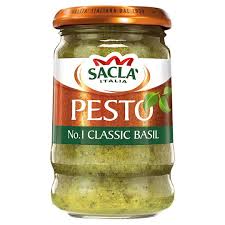
Good sauces:  Paul Newman's sauces are pretty good, SACLA (my favourite), Mezzetta


Chillies: Try not to use fresh chillies, does not go that well with pasta. Use dried chillies, soak in water first before chopping them up, otherwise won't be spicy in the pasta dish.


Mince Meats: Pork, beef or lamb minces (or even chicken mince... but my fav is still lamb) go well with basic pasta dishes with any off the shelf sauces.


Marination of mince meats: This is the critical part of what makes a really good pasta dish. While there are hundreds of combinations, my favoured marination is: Use 2 tbs shallot oil, 1 tbs ginger oil, a pinch of sea salt, a liberal sprinkling of white pepper and ground black pepper, 1 tbs of chili oil if you like it spicy. Mix and let it sit in fridge for at least 2 hours.


Start The Cooking: You can use olive oil but I prefer butter, a generous dollop on low heat with 1 tsp minced garlic. Then add minced meat and cook until well done. Then use cooking cream to bind the bloody thing together, not a lot, just 3-4 tbs. However cooking cream is optional. Taste, then add sea salt as to your preference.


Pasta: Use a liberal amount of salt into boiling water. Only put in pasta when water is boiling. Save some of water for later.


Fresh Herbs:  Can chop some basil, parsley or oregano if you are doing tomato based sauces. For white sauces, chop some rosemary, sage or thyme. Again, highly optional, but if you do, throw them in towards the last 1/3 of your cooking, not at the beginning.
(finish product without veggies)

Finish: Drop the cooked pasta into mix. Put in 2-3 tbs of pasta water and cook out till its got a good consistency. May use parmesan cheese to melt into the sauce (optional). I prefer to melt the parmesan in rather than sprinkle on top later. A key step is to add 1 tsp of sugar just to round off the taste.


Vegetables: Prefer squash, baby asparagus or snow peas (hard veggies). Cook together when boiling pasta. Scoop out first when half done as will be cooked alongside with mix later.


Texture: An important summary of a good pasta dish - there should be differing textures. Think of macaroni and cheese, there is basically only one texture, or porridge, boring. Thus the pasta, meat, sauce, veggies and condiments at the end should help you conjure a dish with 2-3 differing textures.

Sprinkle at the end: These are highly optional. Remember less is more when it comes to pasta dishes - do not attempt to put too many different flavours into one dish. May or may not go with the dishes, up to your own taste buds. Truffle oil; tobiko; parmesan; caviar...


CORNED BEEF HASH
http://malaysiafinance.blogspot.com/2015/08/cooking-with-dali-kick-ass-corned-beef.html

SWEET & SOUR LAMB
http://malaysiafinance.blogspot.com/2014/10/cooking-with-dali-very-spicy-sweet-sour.html

CURRY PORK RIBS
http://malaysiafinance.blogspot.com/2013/08/cooking-with-dali-curry-pork-ribs.html

DRUNKEN CHICKEN
http://malaysiafinance.blogspot.com/2012/09/cooking-with-dali-drunken-chicken.html

BRAISED SPICY GARLIC FISH HEAD
http://malaysiafinance.blogspot.com/2013/09/cooking-with-dali-braised-spicy-garlic.html

PIG TROTTERS VINEGAR GINGER BROTH
http://malaysiafinance.blogspot.com/2012/09/cooking-with-dali-pig-trotters-vinegar.html

Monday, June 25, 2018

Snap Comments - Coffee Shop Talk


Let's all take a breath. The issues that are being debated and discussed today are good issues to have, in a totally different environment. Our new government would listen and react accordingly. The public must also know everyone's got an opinion, and we cannot just follow the lowest common denominator to placate everyone. Sometimes we elect good people so that they will take the hard decisions. We also should be aware all are human and will make mistakes. Let's get on the path to recovery and glory for our country together. Discuss and debate issues without malicious intent but out of the goodness of our hearts.


Foreign Cooks - A very swift about turn. In short, a mistake by the Minister. Should have called for a study before making statements. Anyway, the immediate feedback was better than any study could offer. We cannot just say that locals do not want to be cooks - we lost a lot of Malaysian chefs and wannabes to Singapore because of currency factor; there are plenty of local cooks, just look at the fast food joints. Hence it is not a matter of pay alone but also working conditions and perception of working in hawker/mamak places.

I do agree that we should try to protect our heritage and culture in particular with hawker food. How about a minimum pay of RM2,500 if you employ a foreign worker as a cook? That would work out to be matching RM3,000 a month for locals as proprietors would not need to pay for accommodation.

But all that pales into insignificance cause we need to have more empathetic policies with regards to foreign workers in the first place. One, control the numbers. Two, solve the illegal immigrant workers issue properly and humanely. Three, set up effective bodies to care for the welfare and issues pertaining to foreign workers. Four, cut out the middlemen agents who are presently ripping off the workers. Five, come up with a cohesive foreign workers policy, how many we should have and for which industries - we cannot be relying on them to keep lowering our production costs.


Ringgit - The ringgit eased past 4.00 to the usd but largely on the wholesale negative stance on all things emerging markets at the moment. Note Tun M's statement, a wily politician, who said that he always thought 3.80 was a fair level just as the peg was long ago. That statement immediately caused all currency traders to stop being too aggressive to short the ringgit cause basically Tun has reminded one and all he could use the 3.80 peg again. Very classy and smart without needing to use actual funds to defend the currency.


Media Training and Focus - Looks like new ministers need a crash course in proper ways to deal with the media, and the nuances when dealing with "fired up issues". You must be seen to be on top of situation. If you are not, say you are waiting to be briefed on the situation. (Siti Kassim case, Police). Where was the Home Minister on that? LGE went off on his Mandarin tangent - stay the course, we need not explore a totally new prickly issue for now. Kula went and made a statement that obviously wasn't well thought out enough.


Mandarin - Finance Minister is wrong in his stance of defending the use of Mandarin, period. Wrong is wrong. Use the parliamentary language and the accepted business language of the country first and foremost. Just apologise and move on.

There is nothing wrong going trilingual but Mandarin should always take a backseat. If you issue a statement, yes you can do it trilingual. But not when you are giving new information first hand - it has to be in English or Malay first, even if the Chinese media happens to be the first to see you.


Ministers and Deputy Ministers - There are many who think that Ministerships and Deputy Ministers should be divided according to number of seats won by each party. Please la... let's no go back to the drawing board on what is a proper cohesive coalition. Of course it should not be very slanted but agak-agak is good enough. We should put in capable people first. We elected a PM, let him decide what is best. If they are no good, we can whack them in public and I believe this time Tun M will remove under performers. Before any of the sub parties try to claim how many seats they won for the coalition, please be reminded that without the name of Tun M as the leader of the coalition, many of those seats might not be won. Bear that in mind.


Friday, June 22, 2018

Kiddomo Universe - Where Playland Meets Technology


First of all, this is not paid content. I never take money for product placement for my blog. Thats why my blog is always free of ads and no popups. Hence I make zero money from my blog lol.


If you have kids between 2-12, you should take them to Kiddomo Universe at Level 3 of Starling Mall. Unlike other theme parks or playlands, Kiddomo merges technology with fun.


Kids get to create their own character, and later see that character be your avatar in various games. Kids can create art and see their art come to life. There's even craft and entertainment workshop.


Give it a go, its a family enriching experience. Parents are encouraged to participate together with their kids.


Thursday, June 21, 2018

Things To Discuss Regarding GRAB


a) Grab Food - I don't know about you but Uber Eats was fantastic. I don't know why that even after 4 weeks of Grab taking over, Grab Food is just as bad as Food Panda. Food Panda, the app that is like a casual barista, kinda worked sometimes but you just didn't know when. Food Panda's problem is a lack of control over its last mile delivery. It is the management of a secure team of last mile couriers that spells the end for most retail/service delivery apps. Particularly in Malaysia where getting a permanent group of loyal and dedicated couriers is as difficult as getting someone off handbags addiction.

So far, Grab Food (and Food Panda) vs UberEats is like Malaysia's version of 7-11 vs Family Mart respectively. Btw just try and sign up for Grab Food, its a doozy (not).


Grab and its competition in Manila ...

b) Grab's Domination - Following the deal, Grab is largely a Southeast Asian app. Didi conquered China following a similar deal sale by Uber there. However it is not all clear plain sailing. There are still up and coming companies seeking the same pie: Ryde in Singapore; Hype and Ipara in the Philippines; and the biggest of the lot Go Jek, coming to your nearest Southeast Asian country near you soon from Indonesia.

Go-Jek enjoys a strong market lead in Indonesia, where it is based, and recently raised $1.2 billion in a funding round that included Google as well as Chinese companies Tencent and JD.com and the Singaporean sovereign wealth fund Temasek.

Judging from the Temasek parentage alone, there will be certain places where Go Jek may find it easier to operate in. 

Its not plain sailing for Grab yet. Just go to the Android reviews of the Grab app, its pretty scary. Not all is well at fairyland.


c) Grab's Goodwill Shortfall With Drivers - It is not a substantive issue but one which permeates below the surface. Many of those with Uber before can testify that Uber's system was "kinder" and "more understanding" of drivers compared to Grab's. The number of "banned drivers" is a touchy issue esp when it comes to Grab's "cancellation rules". Drivers may just have to cancel a ride because some customers did not show up for pick up, but having too many cancellations can cause the drivers to be banned.


“Riders are better ‘behaved’ and humane. Uber’s systems, with the 5-minute countdown upon arriving at pickup points (driver compensations) and a two-way rating system is fairer and educates riders to appreciate a driver’s time. I’ve only begun to drive on Grab but I can immediately tell that there’s a difference between the riders for both.”
– A former Uber driver who’s transitioned over to Grab
A few voices said something similar.
“I hope that all of the benefits on Uber’s system is implemented into Grab. There’s a reason why Uber’s drivers remain loyal with them. I hope that Grab listens to more drivers and riders to improve their system.”
Hence, it is imperative that Grab continues to improve its management systems and processes cause where there is room for improvements, there is room for the competition and Go Jek is a proven performer.


d) How Malaysian Is Grab? - Before Malaysians get swelled up with pride with Grab's rise and rise in the ride-hailing app industry. Let's look at just how Malaysian the company is now. No doubt we should be proud that two Malaysians had the brilliant idea and an even more effective execution strategy. But let's not kid ourselves here. Its been a long time that the Malaysian shareholdings' level has now been diluted to an unsubstantial amount. Its nobody's fault, many successful tech companies go through many rounds of funding and each level hence leaving most founders with a pittance.

It has to do with how important is funding/burn rate to a tech company. For example, Zuckerberg still holds 28% of Facebook, giving him a wealth value of $24b. Pony Ma still owns about 9% of Tencent but the company has a market value of $480b. However if your company is one that rides on subsidizing to win market share, rest assured you will need plenty of funding to keep hitting targets prior to a listing.

While there is no official shareholders' list for the new Grab. We can do an estimate by following the various rounds of funding. New composite shareholders for Grab: (~) denotes an approximation ...
1. Softbank (JP) ~ 30-31%
2. Uber (US) 27.5%
3. Didi (China) ~ 10-11%
4. Anthony & management ~ 6-8%
5. CIC (China) 3%
6. GIC (Singapore) 3%
7. Temasek Vertex (Singapore) 3%
8. China Hillhouse (China) 2%

So, there you go. At a $6b valuation (from last round of funding), we may surmise that Grab can aim for a $8-9b IPO next year, and yes their stakes will be diluted even further then.

Thursday, June 14, 2018

How Far Should The Bloodletting Go

Euromoney came up with an article which questioned how far should the "bloodletting" continue in finance in Malaysia. I bring this to a wider spectrum, not just finance but in every facet.

https://www.euromoney.com/article/b18m0sqgwgs3x2/mahathirs-return-puts-the-fear-into-malaysian-finance

Despite public delight, there is a mood of some paranoia in Malaysian business and finance right now – and you can see why. Since the shock opposition election victory on May 9 restored 92-year-old Mahathir Mohamad to power, deposing the party he once led, one person after another with ties to ousted prime minister Najib Razak has been removed from leadership positions in Malaysia’s key institutions. And the big question for many is: who is next? Is it me?
Other institutions said to be facing a great deal of scrutiny under the new government are the Securities Commission, which regulates the capital markets, and the fund for Muslim pilgrimages, Tabung Haji.

When the dust settles and after short-term pain and disruption, many in Malaysia think the outlook for the country and its banks will be better if reform is implemented as planned. In policy terms, this is exactly what many people wanted to happen. But it remains to be seen how much blood-letting has taken place in the country’s senior ranks by the time banks and institutions regroup for a hopefully brighter future.


I do agree that we have to draw a line cause culpability has a wide definition. Some may be caught up in the tangled web for survival purposes. Its the instigators and those who schemed that must be brought to law.


There are various means to curb the transgressors and reform the system without destabilising the working platform:

a) removal of previous senior government appointees in GLCs


b) removal of people with strong links to previous government and benefitted unjustly in private sector


c) removal of payments and allowances to smaller cohorts and gatekeepers


d) remove ineffective rubber stamping board members from GLCs and important finance institutions


e) give 'teeth' to regulatory and supervisory bodies, to that end, these people must be independent and professional, those who do not make the cut gets the cut


As for listed companies, its a grey area. Most companies are in business in some ways with the government. If the bulk of the business is not solely dependent on government contacts and panhandling, we should leave them alone.

The banks, almost every single top banks were tainted in some way, esp with the 1MDB case. Those who were critical in approving or rubber stamping knowingly illegal transactions should be punished. 


Its not just banks or construction firms, we haven't got to property companies. Highly irregular land banking deals should be looked into. Hefty fines should be issued in particular where property companies got sweetheart deals.


Heads must roll. Blood letting must proceed or else the message may not register sufficiently. If you were let go, just be glad there is no prison sentence. Move on. Plus a lot of the heads n cronies are rich from corrupt deals already. Give others a chance. Plenty of Malaysian talent, just go ask Singapore true or not!


Sunday, June 10, 2018

Why Is Oil & Gas Leading The Market


We all saw the ones that got hit big time following the recent elections. Thats because construction are big ticket items and the likelihood of some big projects being pulled, scrapped or renegotiated is enough to adopt the sell first ask questions later strategy.

Why oil and gas stocks were relatively unscathed? My two bob answers:

a) It is so much easier to inflate contract value in construction jobs

b) The ownership of oilfields, not exactly under the jurisdiction of certain ministries


c) To develop oilfields, even if you give it to me free, is not profits, capital still has to be expended and returns are years down the road (same analogy if you were to inflate contract value)

d) The most defining factor was that oil and gas prices were relatively depressed over the last 3-4 years (thankfully) which meant more belt tightening and cutbacks by companies than new projects


While waiting for the construction big projects to settle down, it is only natural that oil and gas counters come to the fore.

What are the country's pressing problems now? Reduce the debt. Service the debt. As mentioned in my posting on managing the debt, a listing of Petronas is a viable option.


That option may be shunted for a better option for now: Petronas needs to ramp up production, yes, it is as simple as that. That way, with higher profits, revenues, and maybe even declare a special dividend to the government over the next 1-3 years.

a-z) a substantive refocus on E&P activities by Petronas


These are not picks per se but likely beneficiaries, in no particular order: Dialog, Sapura Energy, Scomi, Serba Dinamik, Bumi Armada.


p/s These comments above are not buy or sell calls but purely my opinion. Please consult your broker or investment advisor before acting.